

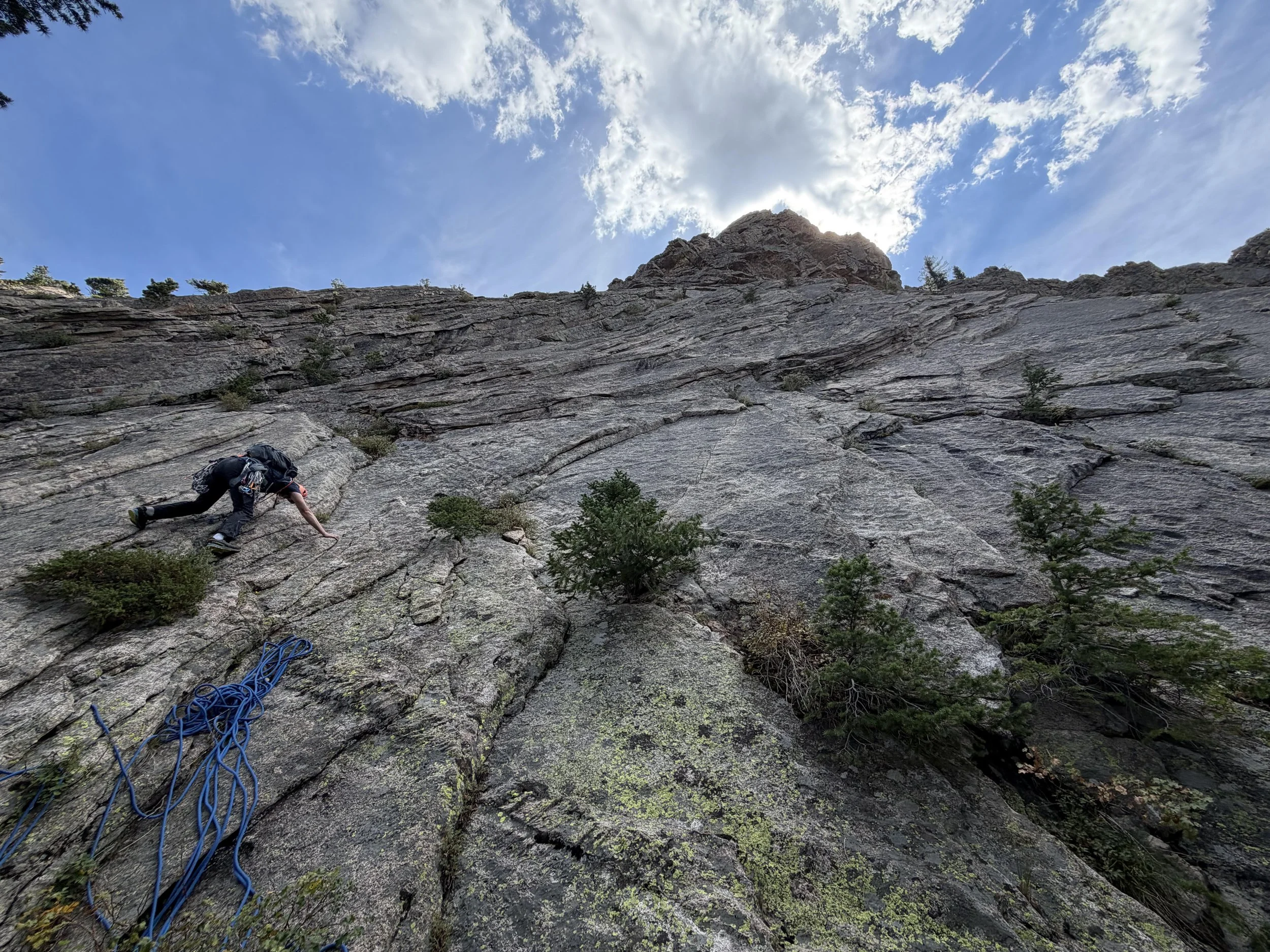
Bolts, Boundaries, and the Work of Sharing Stone
Route development is an act of creation—but it is never creation from nothing. A new line begins with a wall that has weathered for millennia, on land with a history longer and more consequential than any climber’s ascent. It may be public land, private land, or land whose access depends on relationships built carefully over years. A developer’s drill, brush, and rope therefore carry real responsibility.
The best route development does more than add climbs to a guidebook or an app. It makes a crag safer where safety improvements are appropriate, respects the character of the rock, protects ecological and cultural resources, and strengthens the local climbing community. That means treating bolting ethics and access not as private matters, but as shared obligations.
Development Is Stewardship
A developer often gives substantial time, labor, money, and judgment to establish a route. Cleaning loose rock, hiking equipment to a cliff, replacing unsafe hardware, inspecting anchors, communicating with land managers, and resolving access questions are not trivial tasks.
That work deserves respect. But respect for the labor does not create ownership of a cliff, a canyon, or a climbing community.
On public land especially, developers are better understood as stewards than proprietors. Stewardship means asking difficult questions before drilling: Is this route suitable for fixed protection? Does it preserve the area’s existing character? Is there a nesting closure, rare vegetation, archaeological concern, or access agreement at stake? Will a new trail cause erosion? Are the bolts and anchors durable, thoughtfully placed, and compatible with local practice?
Good development includes the unglamorous work: hauling out trash, helping maintain trails, replacing aging fixed hardware, attending access meetings, and sharing accurate information about hazards and restrictions.
Bolts Are Not Neutral
A bolt is a permanent alteration to rock. Sometimes it is the right tool: it can make a cliff accessible, reduce the temptation to use poor natural anchors, create a safe descent, or establish a logical sport route on otherwise blank stone.
But “it makes climbing safer” is not, by itself, an ethical argument for placing one.
A bolt can also change a route’s fundamental experience. Adding protection to a traditionally protected line, retrobolting a runout because it feels uncomfortable, or installing convenience anchors where natural descent options have long been part of the climb can erase the very qualities that made a route meaningful. In other settings, excessive or poorly placed bolts can create visual clutter, accelerate conflict with land managers, or establish a precedent that is hard to reverse.
The relevant question is not simply, “Can we bolt this?” It is, “What kind of climbing does this place support, and what obligations do we have to the people, landscape, and history around it?”
Principles for Responsible Bolting
Local ethics vary—and they should. A desert tower, a high alpine ridge, a roadside sport crag, and an established traditional cliff do not demand identical standards. Still, responsible development usually begins with a few basics.
Know the land status first. Confirm ownership, management rules, seasonal closures, and whether fixed anchors are permitted before doing any work. Learn the local history as well. Talk to longtime climbers, guidebook authors, access advocates, local organizations, and adjacent landowners. What looks untouched may have a long and important history.
Preserve a route’s character. Do not casually convert a traditional, adventurous, or historically significant line into something else simply because more protection would make it easier to approach. Place hardware deliberately: use appropriate, durable materials; avoid unnecessary bolts; build redundant anchors where anchors are needed; and do not leave abandoned hardware or visual clutter.
Remember that a route is more than its pitches. Informal trails, soil compaction, vegetation damage, and crowding at the base can be more damaging than the bolts themselves. Finally, accept accountability. If a decision affects a shared resource, be ready to explain it openly—and to listen when others disagree.
The Problem With Gatekeeping
The word gatekeeping gets used loosely. Sometimes it describes genuine exclusion: withholding basic access information, treating newcomers as unworthy, or using insider status to control a public resource. That behavior weakens the community. It makes climbing less welcoming, less diverse, and less capable of building the broad support that access requires.
But not every boundary is gatekeeping.
A request to respect a peregrine closure is not gatekeeping. Asking someone not to trespass across private property is not gatekeeping. Declining to publish the exact location of a fragile boulder field, an undocumented cultural site, or a sensitive alpine zone is not gatekeeping. Nor is asking a person who wants to bolt a cliff to first understand local history and land-management constraints.
Gatekeeping is about preserving status or control: withholding information to create an inner circle, treating newcomers with contempt, or claiming ownership over public climbing resources.
Stewardship is different. Stewardship shares knowledge thoughtfully while protecting places and access. It welcomes people into the community while asking them to learn the skills, history, and consequences that come with participation.
The goal should be neither reckless openness nor private control. It should be a culture of informed welcome: invite people in, teach them what matters, and make clear that participation comes with obligations.
Share Knowledge, Not Entitlement
Climbing has always depended on shared knowledge. We learn from partners, mentors, guidebooks, local organizations, and the accumulated experience of people who came before us. A healthy community should pass that knowledge on generously.
That does not mean every crag needs to be marketed, geotagged, bolted, or made frictionless. Some places remain healthy precisely because visitation is modest and participants arrive prepared. Some details need to travel through conversation rather than a public pin on a map. And some routes should remain hard, committing, or imperfect because those qualities are part of their identity.
The obligation of experienced climbers is not to guard the door. It is to help newer climbers understand why the door exists, what lies beyond it, and how to enter without damaging the place.
A Better Local Ethic
In the St. Vrain canyons and across the Front Range, access is never abstract. It is built through daily conduct: where we park, how we manage dogs and waste, whether we honor closures, how we interact with landowners, and whether we show up for trail days, hardware-replacement efforts, and access advocacy.
Before developing or altering a route, start with conversation. Consult the local climbing community, land managers, and organizations doing access work. Before dismissing concern as gatekeeping, ask whether someone is protecting a fragile resource, a hard-won relationship, or a climbing tradition worth understanding.
The strongest climbing communities are neither closed clubs nor free-for-alls. They are places where people share knowledge generously, debate changes honestly, protect the land fiercely, and remember that the rock will outlast all of us.
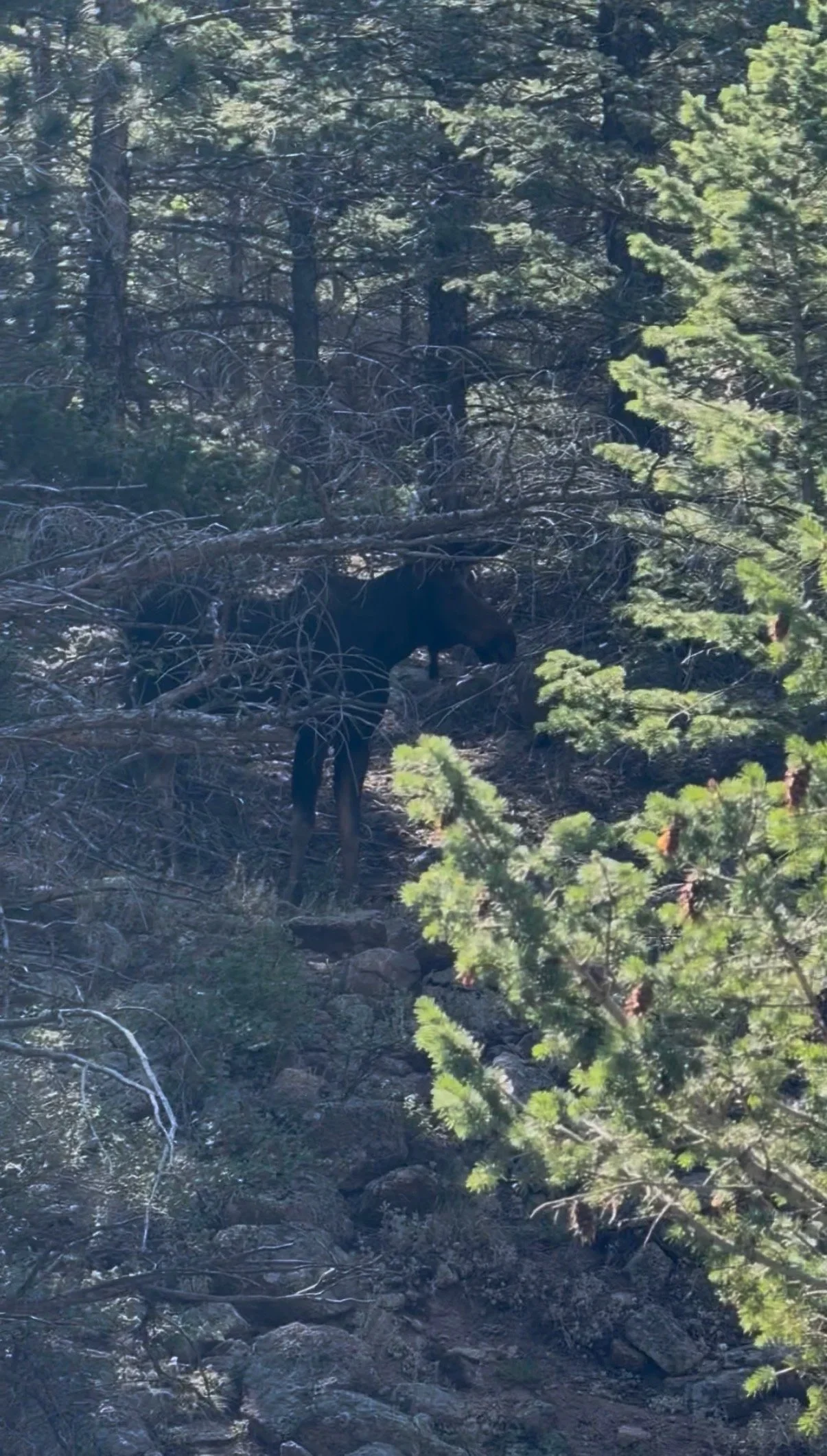
Moose Encounters in the Mountains: What Climbers Need to Know
There’s a particular kind of stillness you notice in the mountains right before something large appears. Not a rustle or a crack—more like a presence. If you spend enough time climbing in Colorado, especially along riparian approaches or subalpine terrain, you’ll eventually meet it: a moose.
And unlike bears or mountain lions, moose don’t behave like predators. They behave like tanks with moods.
I’ve had two recent encounters that prompted me to share how I move through certain terrain. Both times reinforced the same truth: moose demand space, awareness, and zero ego.
Where You’re Likely to See Moose
Moose prefer wet, brushy environments with easy access to water and vegetation. For climbers, that usually means:
• Willow-filled valleys and creek bottoms
• Lakeshores and marshy meadows
• North-facing, shaded approaches with dense undergrowth
• Areas with recent regrowth after fire or avalanche
If your approach follows a creek or cuts through thick willows, assume you’re in moose territory.
Signs a Moose Is Nearby
You’ll rarely hear them before you see them, but there are clues:
• Tracks: Large, heart-shaped hooves, often deep in mud or soft soil
• Droppings: Dark, oval pellets, larger than deer and often in piles
• Browsed vegetation: Stripped willow branches or broken saplings
• Trails: Moose create surprisingly defined paths through dense brush
If you’re seeing multiple signs at once, slow down and start scanning ahead more deliberately.
What to Do if you Encounter a Moose on the Approach or Hike Out
First rule: do not try to scare a moose off. This isn’t a black bear situation.
If you encounter a moose on the trail:
• Stop immediately and assess distance
• Keep at least 50 yards between you and the animal (more if possible)
• If it hasn’t noticed you, quietly back away the way you came
• If it has noticed you, move slowly and deliberately—no sudden movements
• Put terrain between you and it (trees, boulders, elevation changes)
Moose bluff less than people assume. If they feel threatened, they may charge with very little warning. And because they are large herbivores, many people assume they aren’t aggressive. They are. And they can flip that switch quickly.
Reading Moose Behavior
A calm moose looks indifferent—head down, feeding, slow movements.
A stressed or agitated moose may show:
• Ears pinned back
• Raised hackles along the shoulders
• Head held high, staring directly at you
• Stomping or short, aggressive steps forward
If you see any of these, create distance immediately. Do not hold your ground.
What If You’re Climbing and a Moose Is at Your Pack?
This one is surreal, but it happened to me in Vedauwoo a few years ago.
If you’re on the wall and spot a moose below:
• Stay on the wall. Do not rush your descent.
• Avoid yelling or trying to scare it off from above
• Wait it out—moose are usually passing through or feeding, not guarding territory
• Accept that your pack might get investigated (or trampled)
Most of the time, the moose will move on within minutes. Your safest move is patience.
If it lingers for an extended period and you need to descend, plan a calm, controlled rappel and be prepared to redirect your landing zone if possible.
What If Your Dog Is With You?
This is where things get serious.
Dogs and moose are a bad combination. Moose often perceive dogs as wolves and respond aggressively.
• Keep your dog leashed in known moose habitat
• If you encounter a moose, get control of your dog immediately
• If a moose charges, release the dog if necessary—dogs are faster and can escape, while a leashed dog can drag you into danger
• Put distance between yourself and both the dog and the moose
A loose dog that runs back to you after provoking a moose is one of the most dangerous scenarios.
Are There More Moose Nearby?
Often, yes.
Moose are generally solitary, but:
• Cows with calves are extremely protective and more aggressive
• During rut (fall), bulls are more unpredictable
• Good habitat can support multiple individuals in the same drainage
If you see one, assume there could be another nearby—especially in thick terrain where visibility is limited.
Should You Ever Try to Scare One Off?
No.
Unlike smaller wildlife, moose don’t respond predictably to intimidation. Loud noises or aggressive behavior can escalate the situation rather than resolve it.
Your advantage is not dominance—it’s awareness and space.
Final Thoughts for Climbers
We spend a lot of time thinking about rockfall, weather, and gear systems, but wildlife—especially large herbivores—deserve equal attention.
A moose encounter isn’t rare if you’re climbing in the right places. It’s part of the environment. The goal isn’t to avoid them entirely—it’s to move through their terrain without triggering a reaction.
Slow down in dense approaches. Pay attention to signs. Keep your dog under control. And if you look down from a route and see a moose standing over your pack, take a breath and let the mountain run on its own time for a minute.
It usually works out.
And if it doesn’t—well… you’re cooked.
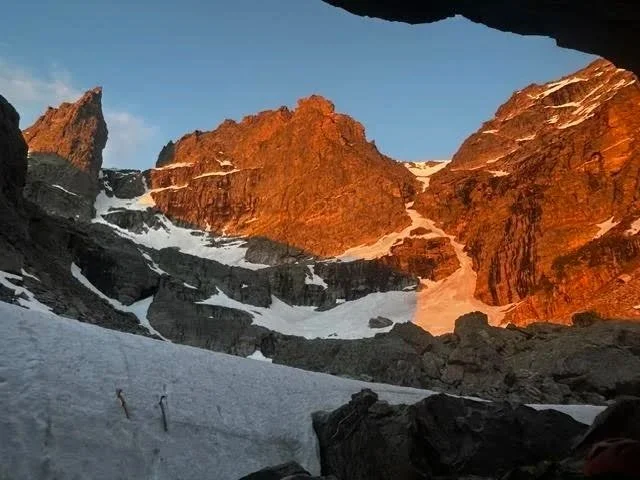
Breaking Into the Alpine: Systems, Gear, and Speed
For experienced trad climbers, the move into alpine terrain isn’t about pulling harder grades—it’s about becoming faster, more efficient, and more self-reliant. The alpine rewards competence and punishes hesitation. If your systems aren’t dialed, the mountain will expose it quickly.
The goal isn’t just to climb. It’s to move well across an entire objective: approach, ascent, and descent.
Train Local: The “Fauxpine” Advantage
You don’t need to commit to a remote alpine route to start building alpine skills. The Front Range offers ideal proving grounds:
• Piz Badile (Peak to Peak Highway): Long, continuous climbing with route-finding and rope management challenges.
• The Watchtower (South St. Vrain): Complex, chossy terrain that forces smart movement and gear placements.
• Twin Sisters (Estes Park): Big, exposed terrain perfect for practicing movement over distance.
Use these zones intentionally. Practice:
• Simul climbing on moderate terrain.
• Moving efficiently with a pack.
• Building fast, minimal anchors.
• Managing rope systems on wandering routes.
Treat these areas like a classroom. Mistakes here are inconvenient. In the alpine, they’re consequential.
Rope Systems: Why Half Ropes Matter
Half ropes (double ropes) are one of the biggest upgrades you can make when transitioning to alpine climbing.
Key advantages:
• Full-length rappels: With two ropes, you can rappel the full rope length, which is critical for long descents and retreating efficiently.
• Reduced rope drag: Clip each rope independently on wandering terrain to keep your system running smoothly.
• Redundancy: Two ropes provide a margin of safety if one is damaged.
• Route flexibility: Better for traverses, ridges, and broken terrain.
Examples:
• Sterling Duetto: Extremely light and packable, ideal for long alpine days where weight matters most.
• Sterling Dyad: Even lighter twin rope option when minimizing weight is critical, though it requires appropriate systems and experience.
If you’re still climbing on a single rope in the alpine, you’re limiting your options—especially on descent.
Rack Strategy: Light, But Not Careless
Alpine racks are about precision, not abundance.
General approach:
• Single rack of cams, often from micro to hand-size.
• Set of nuts (essential for weight savings and versatility).
• A few alpine draws (extendable slings reduce drag significantly).
• Cordalette or lightweight anchor material (or build anchors with the rope when appropriate).
You’re not clipping mussy hooks up here. You’re building fast, functional systems that keep you moving.
Packs: Your Mobile System
Your pack isn’t just storage—it’s part of your efficiency.
Look for:
• Streamlined profile that climbs well (no bulky, swinging loads).
• Capacity in the 20–30L range for most alpine rock routes.
• External attachment points for helmet, axe, or crampons.
• Easy access while moving (top lid or simple roll-top).
Pack strategy matters as much as pack choice:
• Keep frequently used items accessible (layers, food, headlamp).
• Minimize transitions—don’t unpack your entire bag at every belay.
A poorly packed bag costs time at every stance.
Clothing: Plan for Movement and Exposure
Alpine clothing is about adaptability, not comfort at rest.
Key principles:
• Layering system: Light base layer, breathable mid-layer, and a compact insulating layer.
• Weather protection: A lightweight shell is non-negotiable, even on clear days.
• Durable pants or softshells: You’ll be scraping against rock more than at the crag.
• Gloves and hat: Small weight penalty, huge payoff when conditions shift.
You should be slightly cold at the start. If you’re warm standing still, you’ll overheat on the move.
Footwear: Approach and Descent Are Half the Battle
Many alpine days are decided by how well you move before and after the climb.
Options depend on the objective:
• Approach shoes: Ideal for dry, rocky terrain and faster movement.
• Light boots: Better for snow travel, heavier loads, or unstable terrain.
If your descent involves snowfields or icy gullies, you may need:
• Crampons (often aluminum for weight savings).
• Ice axe for stability and self-arrest.
Ignoring this side of the climb is one of the most common mistakes.
Timing, Weather, and Speed
Alpine climbing is governed by time.
• Start early: You want to be off the summit or ridge before afternoon storms build.
• Watch the sky, not just the forecast: Conditions change quickly.
• Maintain a steady pace: Fast teams aren’t rushing—they’re efficient.
Every delay compounds:
• Slow transitions lead to late summits.
• Late summits lead to weather exposure.
• Weather exposure leads to epics.
There’s No Faffing About
At the crag, inefficiency is harmless. In the alpine, it’s a liability.
Dial in:
• Belay transitions under a few minutes.
• Clean rope management.
• Clear communication with your partner.
You don’t need to sprint—but you do need to keep moving.
Why It All Matters
Alpine climbing is not just a harder version of trad climbing. It’s a different discipline entirely—one that blends endurance, logistics, technical skill, and judgment.
When it comes together, the reward is unmatched:
• Long, committing lines.
• Complete self-reliance.
• Movement through huge terrain.
It’s not just about reaching the summit. It’s about executing the entire system well.
And when you do, it’s hard to go back to the crag the same way.

Welcome to Wildcat!
It all begins with an idea.
We are thrilled to announce the grand opening of our store in spring 2024! As the ultimate hub for all your alpine adventure needs, we can't wait to welcome you to our store and set you up for an unforgettable experience in the great outdoors.
Gear up for your adventure:
At Wildcat Mountaineering, we understand the importance of having reliable and high-quality gear to explore the vertical world. Our store will be stocked with an extensive selection of top-notch gear, ensuring that you have everything you need for a safe and successful alpine expedition. From state-of-the-art climbing equipment to technical clothing designed to withstand the harshest conditions, we have you covered from head to toe.
Expert guidance and personalized service:
Our knowledgeable staff is passionate about mountaineering and experienced in various alpine pursuits. Whether you're a seasoned climber or a beginner taking your first steps in the mountains, we are here to assist you every step of the way. We'll provide expert advice, tailored recommendations, and help you find the perfect fit for your adventure needs.
Explore our range of products:
Alpine climbing equipment: Ropes, carabiners, harnesses, helmets, and more.
Technical clothing: Insulated jackets, waterproof pants, base layers, and accessories.
Footwear: Sturdy hiking boots, crampons, and approach shoes.
Backpacks and gear bags: Ergonomically designed packs with ample storage options.
Camping gear: Tents, sleeping bags, cooking equipment, and more.
Navigation tools: Compasses, maps, GPS devices, and altimeters.
Safety equipment: Avalanche beacons, probes, shovels, and first aid kits.
Accessories: Headlamps, gloves, hats, sunglasses, and much more.
Join our community:
Apart from being your go-to store for alpine adventures, Wildcat Mountaineering is committed to building a vibrant community of outdoor enthusiasts. We will organize workshops, training sessions, and events to enhance your skills and knowledge, while providing a platform for you to connect with fellow adventurers.
As we gear up for our grand opening in spring 2024, we invite you to mark your calendars and prepare yourself for an unparalleled shopping experience. Don't miss the opportunity to visit Wildcat Mountaineering and discover the finest gear available for your alpine pursuits.
Stay tuned for more updates and be sure to follow us on social media for exclusive offers and exciting giveaways. We look forward to embarking on this incredible journey with you.
See you soon!

An Angler’s Guide to St. Vrain
It all begins with an idea.
Fly fishing in St. Vrain Canyon can be a rewarding experience, and the choice of flies can vary depending on the time of year, water conditions, and the specific section of the canyon you're fishing. Here are some general recommendations for fly patterns to use when fly fishing in St. Vrain Canyon:
Spring and Early Summer (March to June):
Blue Winged Olive (BWO) Patterns: This may include BWO dries, emergers, and nymphs. BWO hatches are common in the spring and can provide excellent dry fly fishing opportunities.
Caddis Patterns: Caddisflies are active during the spring months. Elk Hair Caddis and various caddis nymphs are effective choices.
Stonefly Patterns: Stonefly nymphs, such as the Pat's Rubber Legs, can be productive, especially in early spring when stoneflies are active.
Midge Patterns: Midges are a year-round food source for trout. Use midge larvae and pupa patterns in smaller sizes.
Summer (July to August):
Pale Morning Dun (PMD) Patterns: PMD dries and nymphs can be effective during PMD hatches, which are common in the summer.
Terrestrial Patterns: Grasshoppers, ants, and beetles are abundant in the canyon during the summer months. Try using hopper patterns like the Parachute Hopper.
Caddis Patterns: Continue to use caddis patterns, especially in the evenings when caddis hatches are prevalent.
Late Summer and Fall (September to October):
Trico Patterns: Trico hatches can be important in late summer. Use small Trico patterns, both dries and nymphs.
Blue Winged Olive (BWO) Patterns: BWO hatches can return in the fall. Be prepared with BWO dries and nymphs.
Streamers: As temperatures cool and fish become more aggressive, streamer patterns like Woolly Buggers and Sculpins can be effective for enticing larger trout.
Year-Round (Throughout the Seasons):
Midge Patterns: Midges are present year-round, so midge larvae and pupa patterns in various sizes are essential for consistent success.
Copper John: This versatile nymph pattern, available in various colors and sizes, can be effective in St. Vrain Canyon throughout the year.
Woolly Bugger: Woolly Buggers in various colors, such as black, olive, and brown, imitate a variety of aquatic and terrestrial food sources and can be productive year-round.
Zebra Midge: This simple pattern is highly effective for imitating midge larvae and pupae.
San Juan Worm: A San Juan Worm pattern in red or pink can be productive when fish are feeding on aquatic worms.
Keep in mind that local fly shops and fellow anglers familiar with the specific conditions in St. Vrain Canyon can provide valuable insights and recommendations for successful fly fishing in the area. Additionally, matching the hatch and adapting your fly selection to the current conditions will increase your chances of success when fly fishing in St. Vrain Canyon.

In Praise of the Obscure
At the mouth of two canyon systems, Lyons, Colorado quietly awaits those climbers willing to venture beyond the well-trodden paths of Eldorado Canyon, Boulder Canyon, and The Lumpy Ridge. As the shop owner in this overlooked climbing haven, I've come to appreciate its hidden charms and the unique appeal of its forgotten walls.
The allure of St. Vrain Canyons lies not in its popularity but in its obscurity. While neighboring areas draw climbers by the thousands, St. Vrain offers solitude and the thrill of exploration. Here, the virgin rock beckons with promises of first ascents and forgotten classics waiting to be rediscovered. For the adventurous climber seeking pristine routes and unparalleled tranquility, this is the place to be.
What sets St. Vrain apart is its untouched beauty and uncharted potential. Unlike the polished classics of Eldorado or the bustling crags of Boulder Canyon, St. Vrain's walls are a canvas waiting to be painted with chalk and the determination of climbers willing to tackle the challenges it presents. Yes, the approaches can be rugged, the fixed hardware questionable, and the lichen abundant. But therein lies the adventure.
To climbers weary of the crowds, St. Vrain offers a refreshing alternative. Picture yourself on a route where the only sounds are the wind rustling through the trees and the distant call of a red-tailed hawk. Imagine pulling a sequence on a route that hasn't seen a climber in years, reclaiming a slice of climbing history one move at a time.
In the age of Google, Mountain Project, and algorithms, climbers have lost the art of driving around and scouting for walls that look like they have to go! When we plug in the GPS coordinates to a trailhead on our phone and drive like hell to get on a 4-star climb before anyone else, we overlook the gems hidden in the shadows of more famous crags.
St. Vrain is a reminder that greatness isn't always measured by guidebook ratings or Instagram likes. It's found in the rawness of the experience, in forging new paths both on the rock and in our climbing journeys.
So, to those who crave the thrill of discovery and the satisfaction of climbing in its most authentic form, I say: venture into the St. Vrain Canyons. Embrace the challenges, savor the solitude, and uncover the treasures that await in these backwater crags. The future classics are here, waiting to be climbed by those bold enough to seek them out.
In St. Vrain, the true spirit of climbing lives on—a testament to adventure, exploration, and the timeless allure of the unknown.
At the mouth of two canyon systems, Lyons, Colorado quietly awaits those climbers willing to venture beyond the well-trodden paths of Eldorado Canyon, Boulder Canyon, and The Lumpy Ridge. As the shop owner in this overlooked climbing haven, I've come to appreciate its hidden charms and the unique appeal of its forgotten walls.
The allure of St. Vrain Canyons lies not in its popularity but in its obscurity. While neighboring areas draw climbers by the thousands, St. Vrain offers solitude and the thrill of exploration. Here, the virgin rock beckons with promises of first ascents and forgotten classics waiting to be rediscovered. For the adventurous climber seeking pristine routes and unparalleled tranquility, this is the place to be.
What sets St. Vrain apart is its untouched beauty and uncharted potential. Unlike the polished classics of Eldorado or the bustling crags of Boulder Canyon, St. Vrain's walls are a canvas waiting to be painted with chalk and the determination of climbers willing to tackle the challenges it presents. Yes, the approaches can be rugged, the fixed hardware questionable, and the lichen abundant. But therein lies the adventure.
To climbers weary of the crowds, St. Vrain offers a refreshing alternative. Picture yourself on a route where the only sounds are the wind rustling through the trees and the distant call of a red-tailed hawk. Imagine pulling a sequence on a route that hasn't seen a climber in years, reclaiming a slice of climbing history one move at a time.
In the age of Google, Mountain Project, and algorithms, climbers have lost the art of driving around and scouting for walls that look like they have to go! When we plug in the GPS coordinates to a trailhead on our phone and drive like hell to get on a 4-star climb before anyone else, we overlook the gems hidden in the shadows of more famous crags.
St. Vrain is a reminder that greatness isn't always measured by guidebook ratings or Instagram likes. It's found in the rawness of the experience, in forging new paths both on the rock and in our climbing journeys.
So, to those who crave the thrill of discovery and the satisfaction of climbing in its most authentic form, I say: venture into the St. Vrain Canyons. Embrace the challenges, savor the solitude, and uncover the treasures that await in these backwater crags. The future classics are here, waiting to be climbed by those bold enough to seek them out.
In St. Vrain, the true spirit of climbing lives on—a testament to adventure, exploration, and the timeless allure of the unknown.